













Epcon™ G5™ XTREM™
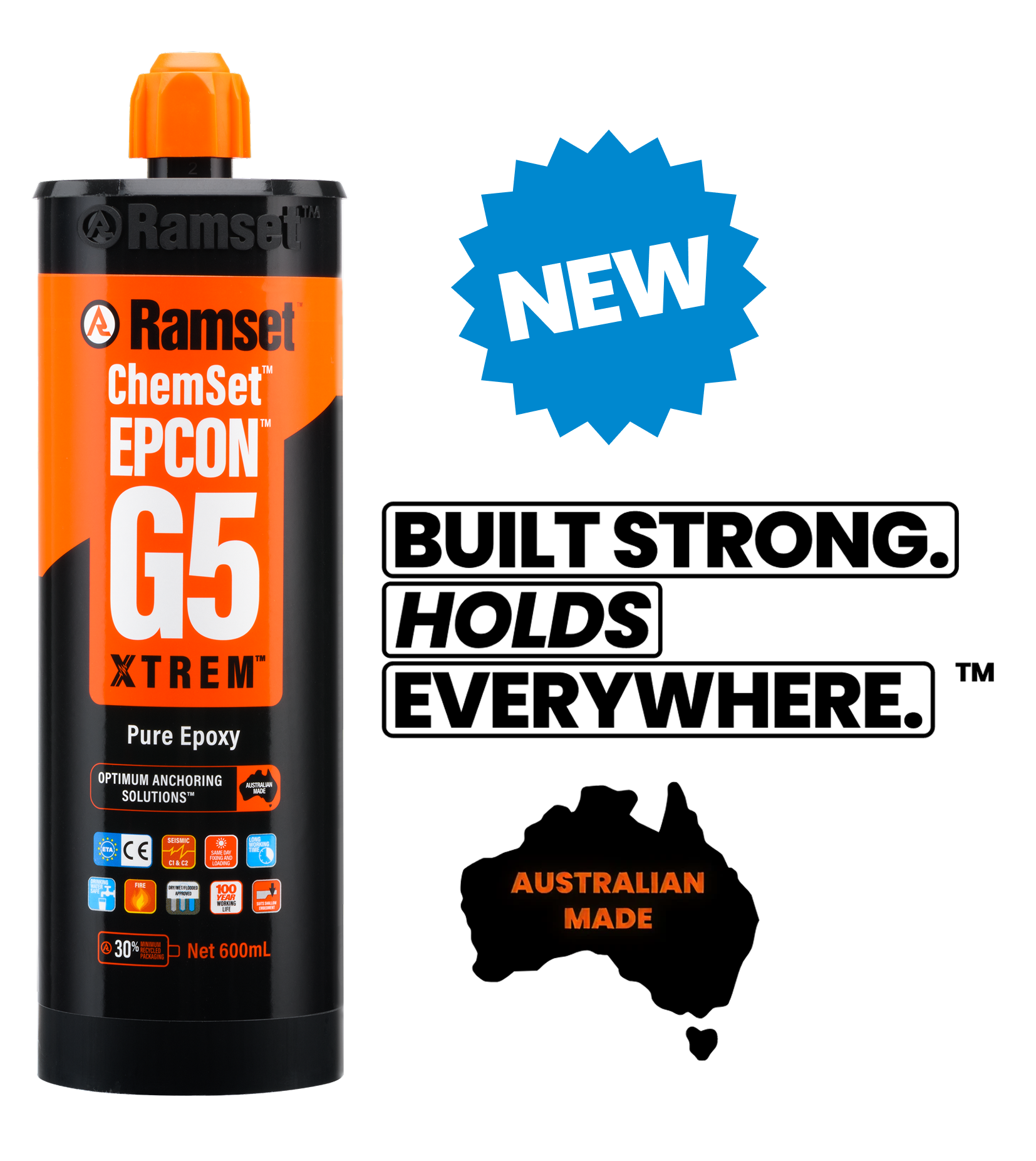
What’s New in
ChemSet Epcon G5 XTREM
ChemSet Epcon G5 XTREM introduces a new formulation designed to improve performance, consistency, and on site usability. The refreshed packaging has been carefully considered to deliver a more cohesive range, clearer identification, and a stronger alignment with the Ramset brand.
Key Product Enhancements
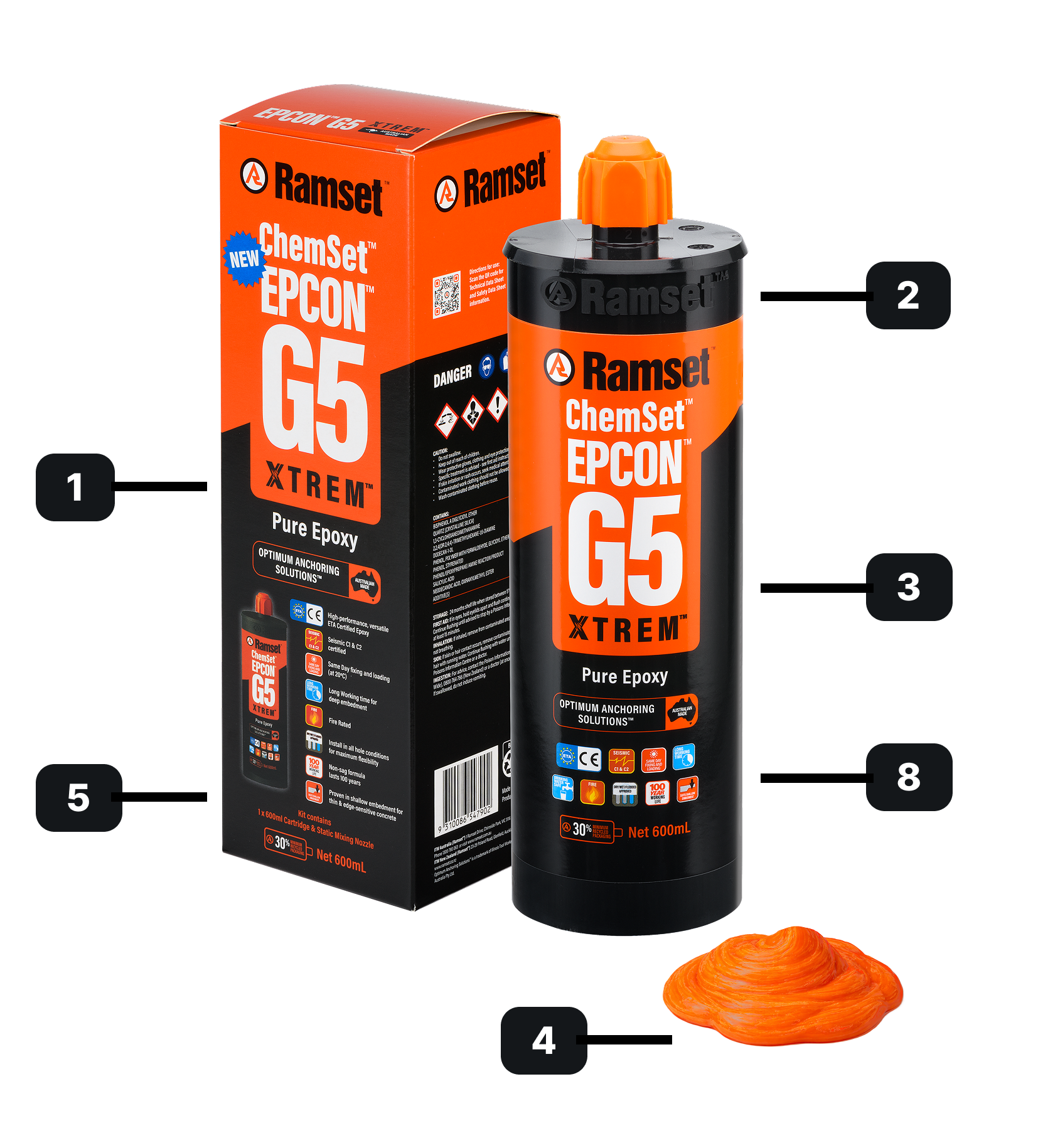
- The ‘XTREM’ designation aligns with our broader seismic chemical and mechanical anchoring range.
- Improved no‐leak cartridge featuring embossed Ramset and ChemSet branding, now including O‐rings.
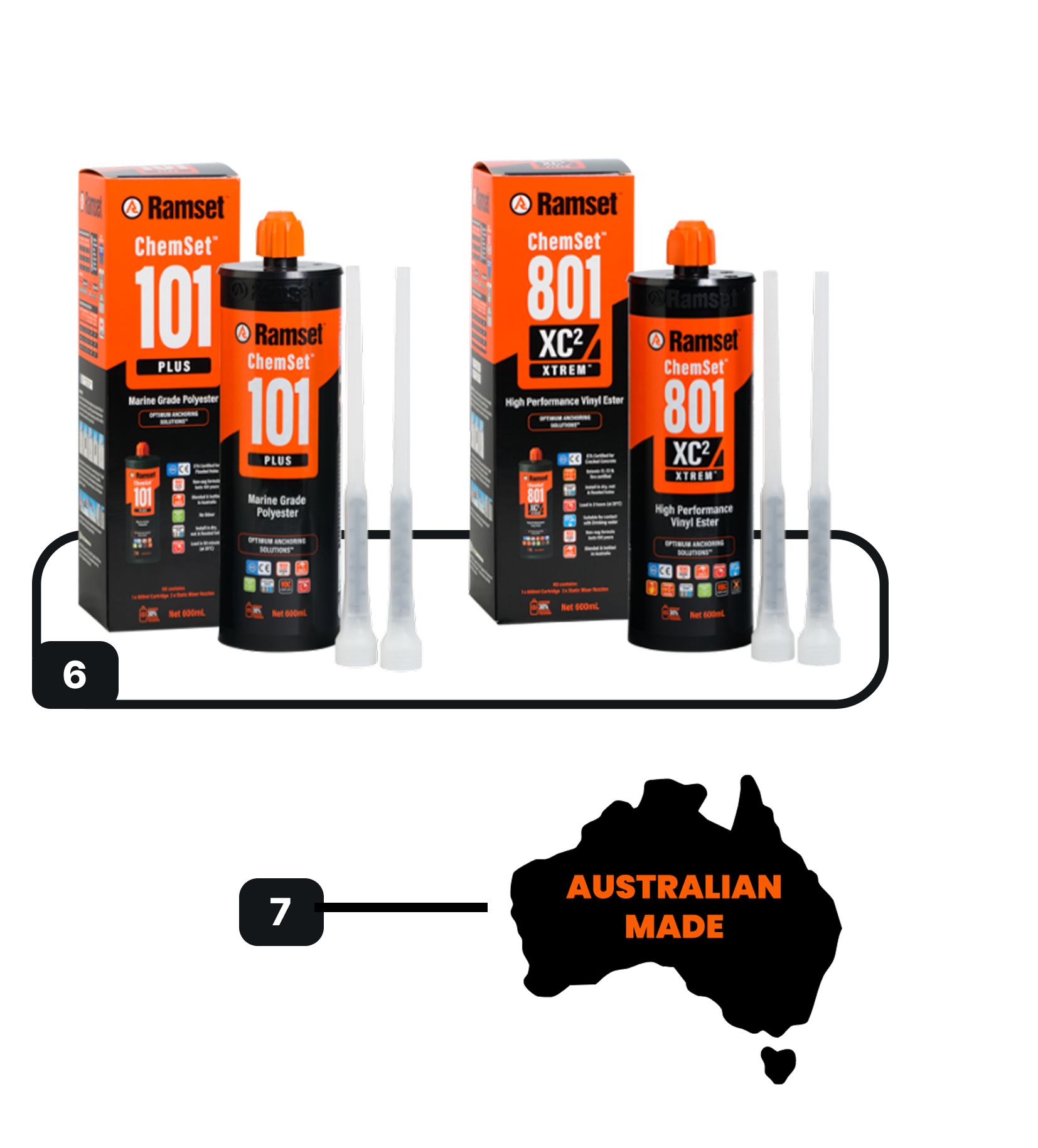
- Uniform cartridge design implemented across the entire range.
- Product colour updated to orange to align with the Ramset brand.
- All products are now supplied in inners and includes 1 ISNE nozzle to all retailers.
- ChemSet branding delivers a cohesive, uniform look across the full chemical portfolio.
- Mixed, filled and packaged on the production line at Chirnside Park.
- Unique cartridge ID coding ensures complete traceability from factory to fix.

Q: I need to purchase Ramset Chemical Anchors for a project, and I am not too sure how many tubes to buy for my application, is there a way I can quickly work this out?
Just head to our ChemSet™ Cartridge Volume Calculator where you can enter in the anchoring product, bar type, temperature, and hole depth. The calculator quickly estimates the number of cartridges required for the task to save you time, reduce waste and help you stick to budget.
Q. When should you use chemical anchors?
Chemical anchoring offers superior strength, ideal for critical loads such as heavy machinery and structural steel. It’s also ideal for creating watertight seals and solidifying weak or hollow material such as brittle brick or hollow blocks.
Q. Why are chemical anchors preferred for high-load concrete applications?
For high-load concrete applications, chemical anchors are typically the preferred solution as it provides reliable load capacity and better performance in challenging site conditions.
By using chemical anchors, this minimises outward expansion stress that could otherwise crack concrete. This is especially necessary when fixing closely spaced anchors or providing high structural bonding performance for better load distribution.
Q. What causes a chemical anchor to not cure properly?
If your chemical anchor isn’t curing, it is most probably due any of the below factors.
- Temperature: Extreme cold affects cure time – always follow the product recommendations.
- Proper hole preparation: dust, moisture and debris can block proper bonding, so ensure the cavity is thoroughly clean before anchoring.
- Product age and storage: Expired products will not cure properly, nor will formulas that have been stored in extreme conditions such as hot environments, which can affect the formula’s chemical properties and efficacy. Please follow the product guidelines.
Q. How long does chemical resin last once opened?
Epoxy resins usually have a shelf life between 6 to 12 months.
Q. Why does chemical anchor resin fail in New Zealand conditions?
Chemical anchor resins can fail in NZ conditions if the wrong product is selected for the environment. Some blended or modified resins are designed for specific cure times and controlled site conditions which may only suit general-purpose or generic anchoring on site.
These products are not typically intended for critical structural loads or demanding environments, such as wet, cold temperatures, coastal exposure, or seismic zones.
In these conditions, a certified high structural-grade epoxy or vinyl ester system would be better suited to provide a better-quality bond strength and long-term performance, especially in cracked concrete and heavy structural applications and rebar anchoring.
Q. How can I ensure my chemical anchor design meets Australian and New Zealand standards?
iExpert is a free Design Anchoring Software which makes anchor design simple and reliable. It covers cracked and uncracked concrete, fire and seismic design. The software supports multiple methods in line with Australian and New Zealand standards for compliant and reliable specification when using Ramset chemical anchors.

